
Selecting a tabletop for a restaurant involves balancing durability, aesthetics,
budget, and function. Here’s a breakdown to help guide your decision:
1. Material Options & Their Pros/Cons
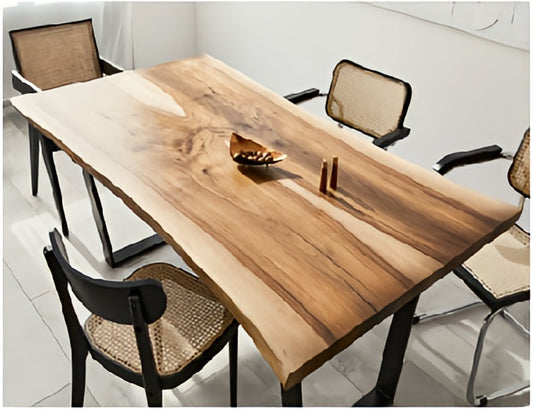
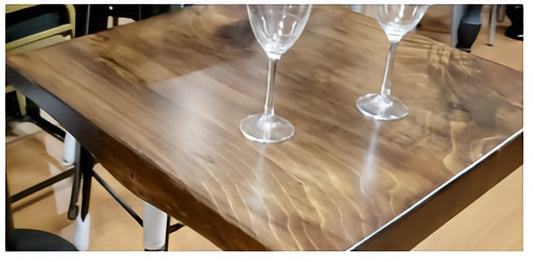
Wood: Classic look, durable, can be refinished. Expensive, sensitive to heat/moisture
if not sealed
Laminate: Affordable, many colors/styles, easy to clean. Can look cheap and edges may chip over time.
Veneer (Wood over core) Looks like wood, lower cost than solid wood. Not as durable, can peel or chip.
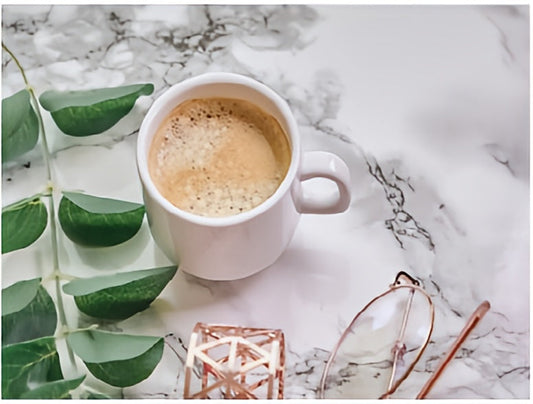
Granite/Quartz/Stone: Elegant, extremely durable, heat/moisture-resistant. Very heavy, expensive, limited in color matching
Resin/Epoxy: Durable, colorful or custom designs. Can scratch or yellow with age
2. Shape & Size
Round tables: Great for conversation, fewer edges in tight spaces.
Square/rectangular: Best for seating flexibility and maximizing space.
Communal/long tables: Popular in casual or social dining settings.
3. Edge Style
Bullnose (rounded): Comfortable and safe
Eased edge (slightly rounded): Clean modern look
Square edge: : Inexpensive but easy to chip.
Metal edge: Good for high-traffic diners or industrial look
4. Finish Considerations
Matte: Hides fingerprints and scratches better
Glossy: Reflects light, modern look, but shows wear faster
Sealed surface: Important for sanitation and durability
5. Usage Factors
Indoor vs. Outdoor: Outdoor tops should be UV-,heat-, and water-resistant (e.g., resin, teak, HPL)
Cleaning: Easy-to-wipe surfaces reduce labor and improve hygiene
Traffic level: High-use areas may need more durable materials like laminate, quartz, or stainless steel.
For Frequently Asked Questions about Table Tops and Bases CLICK HERE
-

Gallery Of Tables
-

Custom Tables
-

River Table Tops
-

Quick Shop Economy Tops
-

Butcher Block Tops
-

Formica Table Tops
Multiple Colors
Coordinating 3mm PVC Edge
1 1/8" Edge or 2" Edge -

Formica Table Tops
Multiple Colors
T Mold Edging
1 1/4" Edge -

Formica Table Tops with Steel Edge Tops
-

Retro T Mold Formica Table Tops
Multiple Colors
1 1/4" Edge -

Corian Table Tops
(Engineered stone) -

Live End Wood Table Tops
-

Resin Tops
-

Padded Vinyl Table Tops
1″ thick
Cushioned white vinyl covering -

Table Sets
-

Steel Mesh Table Tops
-

Outdoor Slat Table Tops
-

Table Bases
-

Graphic Logo Table Tops


